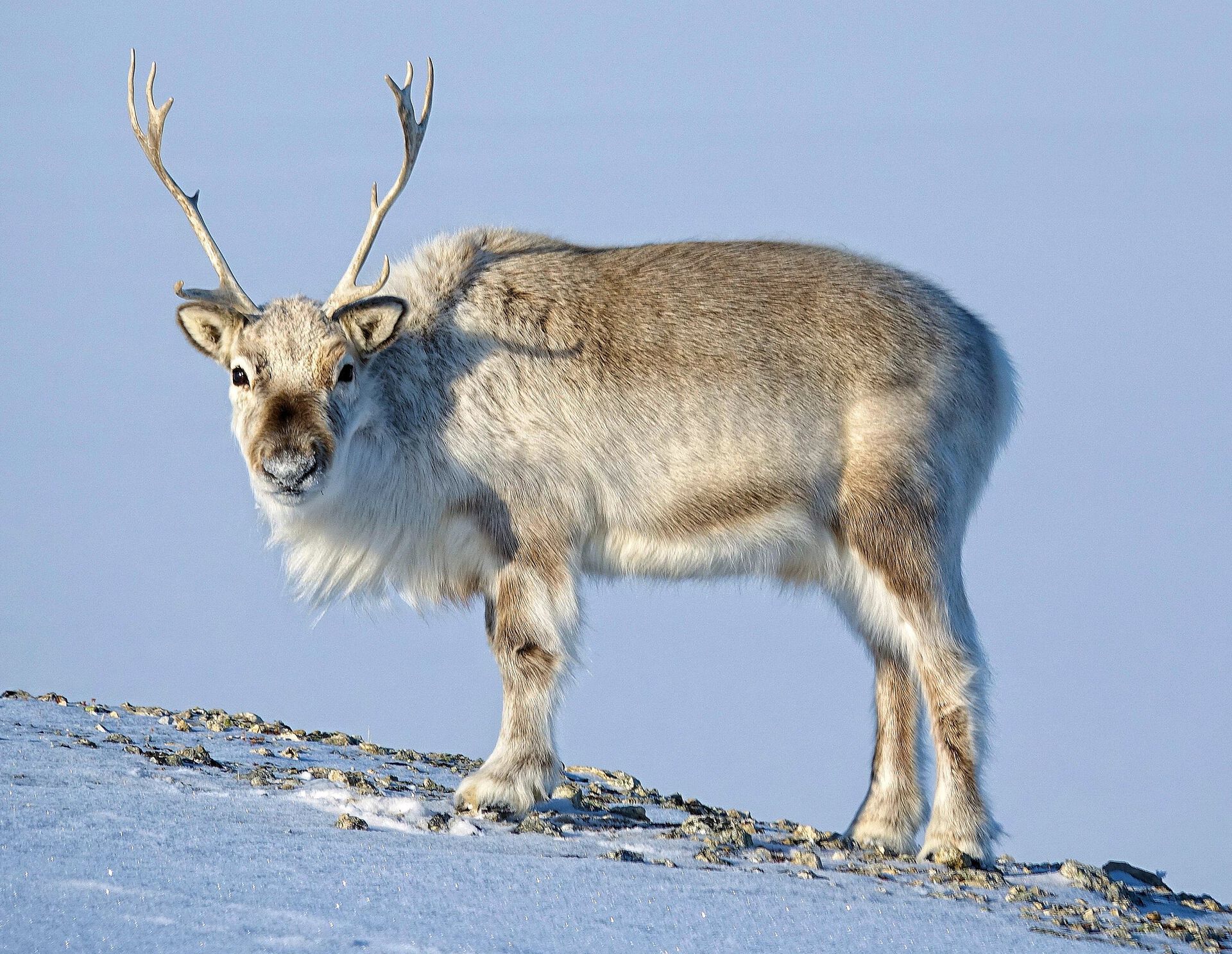
As one of the northernmost plant-eating mammals, the Svalbard reindeer is unique to all other reindeer species. With its small stature, and thick fur, this ungulate is perfectly adapted to life in the harsh Arctic climate. For instance, a feature that distinguishes the Svalbard reindeer from its relatives is its ability to generate large fat reserves by eating reindeer lichen during the summer. These fat reserves, combined with a slower lifestyle, helps keep the reindeer alive during the long winters.
As the climate on Svalbard changes, with wet summers and mild winters, the Svalbard reindeer will be affected. How is still unclear, but with these high-quality reference genomes generated by EBP-Nor, we will be able to study their genomic adaptations better than ever before.
DNA for the Svalbard reindeer assemblies were extracted from the blood of a male individual, and was sequenced on the PacBio Sequel II, and the Illumina NovaSeq 6000, generating HiFi- and Hi-C reads, respectively. The reads were assembled using hifiasm, scaffolded with YaHS, decontaminated with NCBI´s foreign contaminant screen-tool, and curated using the GRIT Rapid curation suite.
During curation we were able to identify 34 autosomes in haplotype 1, and equivalent number of chromosomes in haplotype 2. We also identified the two allosomes, X and Y, in haplotype 1. The total length of the assembly containing both sex chromosomes is 2.97 giga basepairs, with a scaffold N50 of 69.8 mega basepairs, and BUSCO completeness of 96.3%.
Haplotype 1 is available at https://www.ebi.ac.uk/ena/browser/view/GCA_949782905 and haplotype 2 is available at https://www.ebi.ac.uk/ena/browser/view/GCA_951394145 .